Lecture:
Healing Ecology: A Buddhist Perspective on the Eco-crisis
Does Buddhism offer any special perspective on the ecological crisis? Do its teachings imply a different way of understanding the biosphere, and our relationship to it, which can really help us at this critical time in history when we are doing so much to destroy it?
There are reasons to doubt it: after all, Śākyamuni Buddha lived in a very different time and place, Iron Age India. But the Buddha did know about dukkha, the term usually translated as “suffering” yet to be understood in the broadest sense: dissatisfaction, discontent, anxiety—basically, our manifest inability to be happy, which does not mean that life is always miserable but that even those who are wealthy and healthy experience a disease that keeps gnawing. That we find life frustrating, one damn problem after another, is not accidental, because it is the nature of an unawakened mind to be bothered about something.
What, if anything, does that imply about the ecological crisis? There are precise and profound parallels between our usual individual predicament, according to Buddhism, and the present situation of human civilization. This suggests that the eco-crisis is as much a spiritual challenge as a technological and economic one. Does this mean that there is also a parallel between the two solutions? Does the Buddhist response to our personal predicament also point the way to resolving our collective one? ...
The text of this lecture is available online.
Workshop:
Transforming Self, Transforming World

What is the connection between our personal transformation and the transformation of society?
Buddhism emphasizes the relationship between dukkha (our inability to enjoy life) and anatta (the sense of a separate self is delusive). In modern terms, the sense of self, being an ungrounded and therefore insecure construct, is haunted by a sense of lack. Since we usually do not understand the source of this uncomfortable feeling, we often try to resolve it in ways that just make things worse. Why do we never have enough money, fame, time? Money and fame become a kind of symbolic reality with which we try to fill up our sense of lack. We are obsessed with the future because that is when our lack will be resolved.
This means that obsession with money and fame is more than an individual problem: it reveals where our society is stuck. The “three poisons” (three unwholesome roots of evil) that the Buddha identified have become institutionalized and taken on a life of their own: our economic system institutionalizes greed, racism and militarism institutionalize ill will, and the corporate media institutionalize delusion. And our collective sense of separation from the rest of the biosphere lies at the heart of the ecological crisis.
Any personal awakening we may experience remains incomplete until it is supplemented by a “social awakening” that realizes the importance of responding to these institutionalized causes of widespread suffering.
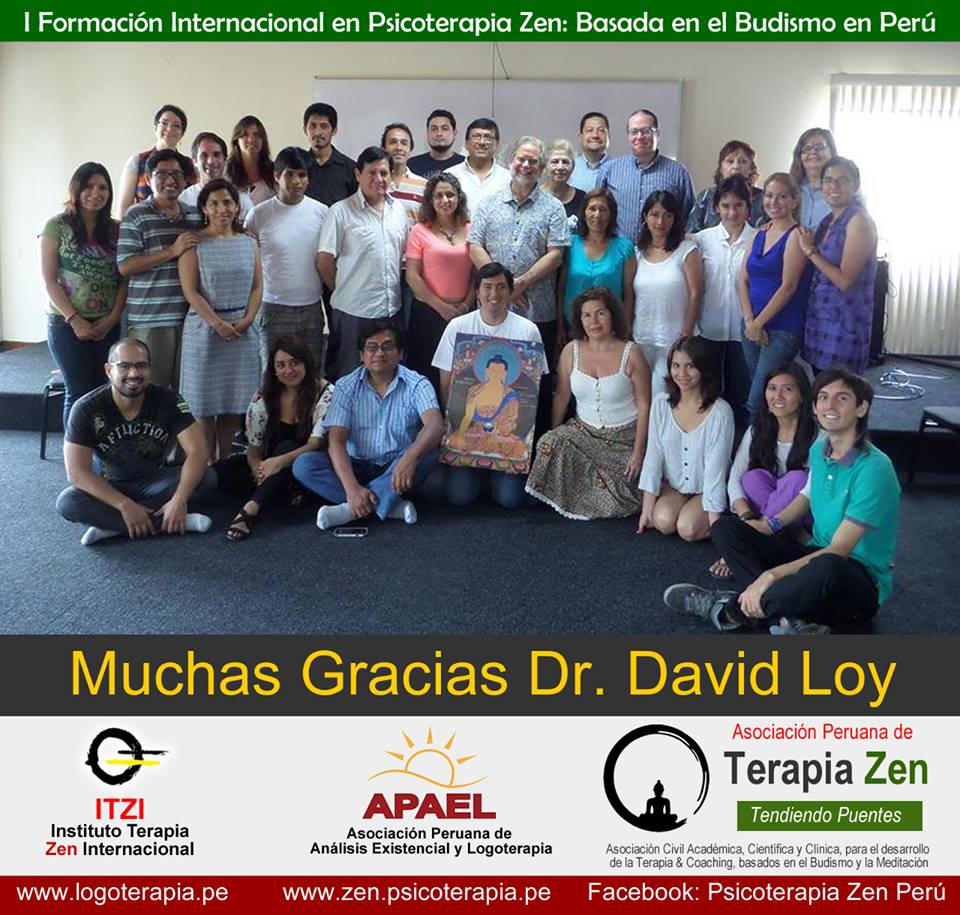
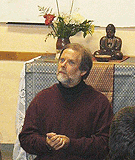
Image from workshop in Buenos Aires, 2010
Workshop:
The World is Made of Stories
Those who meditate are familiar with the warnings: “Don’t cling to concepts!” Yet concepts in themselves are fragments, meaningful as parts of stories. The problem is not stories themselves but how we relate to them. We do not see our stories as stories because we see through them: the world we experience as reality is constructed with them.
That the world is made of stories is consistent with what Buddhism says about the human predicament and how it can be resolved. The foundational story we tell and retell is the self, supposedly separate and substantial yet composed of the stories “I” identify with and attempt to live. Different stories have different consequences. Karma is not something the self has but what the sense of self becomes, when we play our roles within stories perceived as real. As those roles become habitual, mental tendencies congeal and we “bind ourselves without a rope.”
If the self is made of stories, what does that imply about its death? If the world is made of stories, what does that imply about its emptiness, what Buddhism calls shunyata? Do our stories obscure a craving for power that underlies and motivates what we do, or is power itself a screen-story for something else? If delusion is awareness stuck in attention-traps, and enlightenment liberates awareness, does the spiritual path involve finding the correct story, or getting rid of stories, or learning to story in a new way?
In addressing these and other issues, this workshop offers a new way of understanding Buddhism and a new Buddhist understanding of the Way.